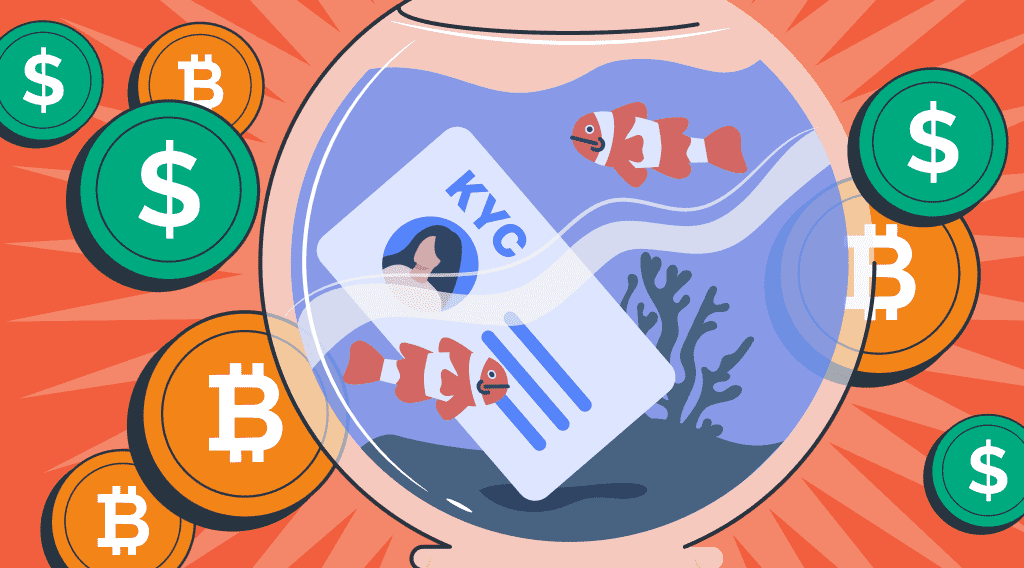
How to Buy Crypto With Credit Card Without KYC?
A few years ago, KYC (Know Your Customer) procedure was introduced to protect both customers and trading platforms. Most crypto exchanges require you to sign up with them, take your selfie, send in your ID, and provide your credit/debit card details to buy or sell crypto coins. As the market is becoming more regulated, it gets more difficult to find an exchange with no KYC for buying crypto.
In general, a KYC procedure may include ID card verification, face verification, document verification such as utility bills as proof of address, and biometric verification. Banks and exchange platforms must comply with KYC regulations and anti-money laundering regulations to limit fraud.
Many customers, especially in the crypto industry, find this inconvenient and believe that KYC or verification contradicts the whole idea of cryptocurrencies and the freedom they provide in the digital world. Crypto users who are extremely protective of their privacy continue to seek out exchanges and swappers that are free from KYC despite the associated risks. That’s why it makes us happy to announce no KYC crypto purchases!
How Does Buying Crypto With No KYC Work at StealthEX?
As StealthEX respects its customers and wants to make your experience with us as comfortable as possible, we introduce no KYC purchases to new StealthEX users. It will be one extra step towards the freedom our customers require and a more user-friendly experience for them. If you’re tired of endless IDs and providing all the platforms with your personal details, StealthEX is for you. The platform gives you a great opportunity to exchange crypto without boring verifications.
Thanks to StealthEX you can now purchase an amount of crypto without KYC if it’s less than $700 or the equivalent of this amount in other currencies. As long as your total purchases don’t exceed $700, you don’t have to verify your identity. You can make one big purchase or several small $20, $50 or $100 transactions. StealthEX allows users to seamlessly exchange their assets across chains in minutes without the need to verify their identity.
By offering an opportunity to buy cryptocurrency up to $700 without KYC, StealthEX aims to simplify the process of entering the world of cryptocurrency. Now, is this even legal? Yes, it is. As a rule, exchanges must identify the customer if they want to buy or withdraw funds over $1000 or more, while purchases under $1K do not require verification checks. Tiresome and long verification processes, even for the smallest amounts of crypto, should be a thing of the past. StealthEX is here for you to smooth out your online crypto purchases
How Can You Benefit from No KYC Swaps?
If you’re a newbie and have little or no experience with cryptocurrencies, you are far more likely to try and make a small purchase via a platform that will provide you with a seamless user experience. Nobody likes verification procedures and nobody likes to wait for their documents to come through. No one seems to have time to do that in the internet, where most things can be accessed instantaneously. A large number of customers are more likely to give up an onboarding process if it’s long and turns those endless minutes of waiting into hours, and you will most definitely be putting the KYC procedure off and could potentially miss the moment to buy your preferred crypto at a great price.
All of this is even more true for crypto enthusiasts that love the digital crypto world for its quick transactions. It’s a fact that swapping your crypto through an exchange is way more tedious, time-consuming and/or expensive than just using an instant non-custodial swapper like StealthEX.
No KYC buyer’s experience lets StealthEX introduce the simplicity of crypto swaps and help their customers stay happy and content. While crypto exchanges provide a lot of extra features, including trading, it’s easier to swap cryptocurrency via platforms like StealthEX: now, you don’t need to collect all that boring paperwork to buy crypto.
How to Buy Bitcoin with Credit Card Without KYC?
Here’s how you can make a crypto purchase on StealthEX:
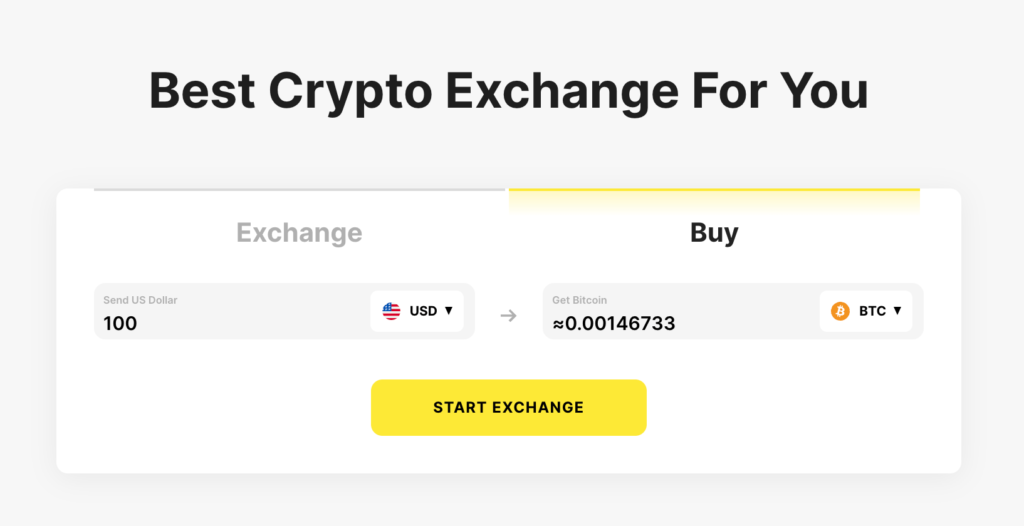
- Just go to StealthEX. Open the «Buy» crypto window instead of the automatically loaded «Exchange».
- Then select fiat currency and choose the cryptocurrency that you want to buy. For instance, USD to BTC.
- Enter your crypto wallet address.
- When buying an amount of crypto under $700 for the first time you won’t need to take the KYC procedure. So just send in the fiat and wait for your purchase to be processed!

Make sure to follow us on Medium, X, Telegram, YouTube, and Publish0x to get StealthEX updates and the latest news about the crypto world. If you need help, drop us a line at support@stealthex.io.
Please make sure to always research any cryptocurrency and assess your risks before you invest.
know your customer KYC KYC AML NO KYC non custodial exchangeThe post No KYC for Buying Crypto on StealthEX first appeared on StealthEX.]]>
Unlike traditional wallets that store physical bills, cryptocurrency wallets don’t hold the actual cryptocurrency itself. Instead, they securely store cryptographic keys that come in two forms: public keys and private keys.
- Public keys, following the elliptic curve cryptography protocol, are complex mathematical strings that act like your bank account number, allowing others to send you crypto.
- Private keys, on the other hand, are even more sensitive. These are often represented as a 256-bit number and act as the equivalent of your PIN, used for signing transactions and spending via cryptographic signatures.
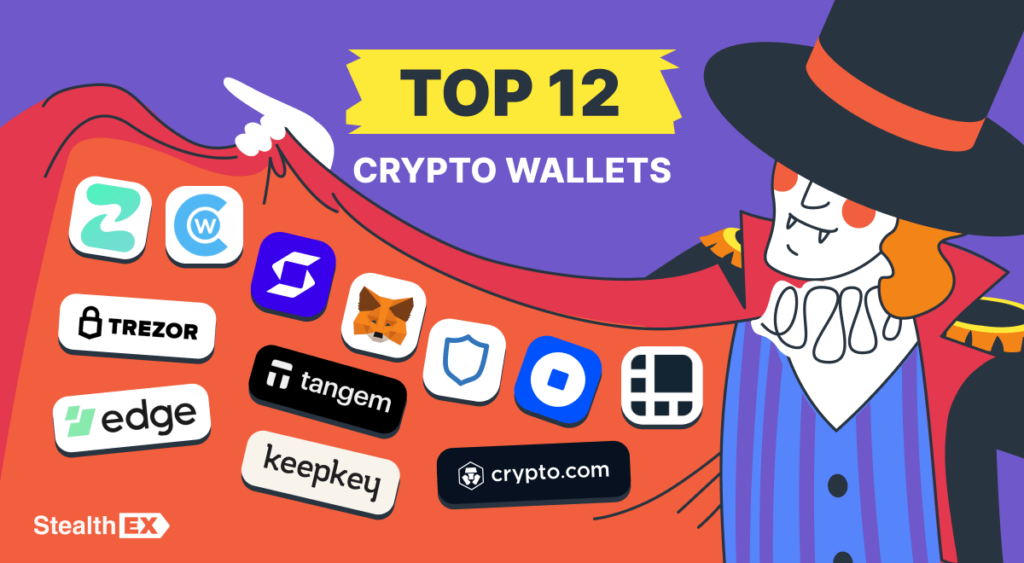
There are lots of crypto wallets on the market today, each offering helpful features and security measures. From user-friendly mobile apps with hot storage functionality to cold storage devices built for maximum security through hardware isolation and often implementing multi-signature technology for added transaction authorization, the optimal choice depends on your investment style and risk tolerance. A seasoned investor with a sizable portfolio might prioritize the robust security of a hardware wallet, while an amateur user might favor the convenience of a mobile app with multi-signature capabilities for enhanced security. That’s why it’s essential to select the perfect fit for your crypto journey.
Understanding the functionalities and security considerations of each option, including hot versus cold storage, public and private key management, and potential cryptographic protocols used, is a way to make an informed decision and protect your digital assets.
The Top 12 Crypto Wallets to Consider Now
Here are the best crypto wallets in terms of functionality and security:
- Trust: A Security-Focused Wallet for Long-Term Investors.
- Cake Walllet: A User-Friendly Mobile Wallet with Enhanced Features
- Edge: A Comprehensive Mobile Wallet for Secure Crypto Management
- Ledger: A Safe Hardware Wallet for Every Crypto Need.
- Trezor: An Open-Source Wallet for Thousands of Cryptocurrencies.
- KeepKey: A User-Friendly Hardware Wallet With Staking Features.
- Coinbase: A Protected and Versatile Wallet for Beginners.
- MetaMask: The Most Popular Wallet for dApps and Browser Integration.
- ZenGo: A Keyless Wallet for Easy Management.
- Crypto.com: The Best DeFi Wallet for Effortless Yield Generation.
- Tangem: A Smart Card Hardware Wallet for On-the-Go Security
- SafePal: A Fortress Hardware Wallet With DEX Integration.
Trust: A Security-Focused Wallet for Long-Term Investors
Trust is designed for the safe storage of cryptocurrencies. The main task is to ensure the safety of your digital assets while you follow a “buy and hold” strategy, counting on the further growth of the crypto industry. This wallet is suitable for long-term investors who want to avoid risking their savings.
The main Trust advantage is a high level of security. Users have full control over their private keys. This means that only you can access your funds. Even the app developers don’t have access to them.
Another important benefit is the support of a huge number of cryptocurrencies. You can store popular coins like BTC, ETH, BNB, TRX, and hundreds of lesser-known altcoins. The app regularly adds support for new assets.
Furthermore, this wallet has a convenient cryptocurrency exchange tool. It allows you to easily convert one coin to another right in the app, without the need to use third-party exchanges. The exchange process is simple, even for beginners.
Trust supports the work with dApps in popular blockchain networks, like Ethereum, BSC, and others. Which distinguishes the app from many other wallets, where dApps aren’t available.
Cake Walllet: Your Keys, Your Coins
Cake is a versatile non-custodial mobile wallet designed to offer ease of use without compromising on security. It supports a wide range of cryptocurrencies and provides additional functionalities to enhance the user experience.

Cake Wallet offers seamless integration with various blockchains, allowing users to manage multiple assets within a single app. Its intuitive interface makes it easy for both beginners and experienced users to navigate and perform transactions effortlessly.
Key Features:
- Multi-Currency Support: Supports Bitcoin, Ethereum, and numerous other altcoins, enabling diversified portfolio management.
- Built-In Exchange: Users can swap cryptocurrencies directly within the app without needing external exchanges.
- Enhanced Security: Implements strong encryption standards and offers biometric authentication to protect user funds.
- User-Friendly Interface: Designed with simplicity in mind, making it accessible for users of all experience levels.
- Open-Source Code: Ensures transparency and allows the community to audit and improve the wallet’s security features.
Cake Wallet is an excellent choice for users looking for a reliable mobile wallet that balances functionality with ease of use.
Edge: A Comprehensive Mobile Wallet for Secure Crypto Management
Edge Wallet is renowned for its emphasis on security and user privacy. It offers a comprehensive suite of features that cater to both novice and seasoned crypto enthusiasts.

Edge Wallet stands out with its client-side encryption, ensuring that users’ private keys are never exposed to external servers. This commitment to privacy makes it a trustworthy option for those concerned about the safety of their digital assets.
Key Features:
- Multi-Asset Support: Handles a wide array of cryptocurrencies, allowing users to manage their entire portfolio within a single application.
- User Privacy: Does not require personal information to create a wallet, maintaining anonymity for its users.
- Secure Backup Options: Provides encrypted backups that can be stored on various cloud services, ensuring users can recover their wallets if needed.
- In-App Exchange: Facilitates easy swapping of assets without leaving the wallet interface.
- Integration with Hardware Wallets: Supports integration with popular hardware wallets for enhanced security.
- Intuitive Design: Offers a clean and straightforward user interface, making navigation and transaction management seamless.
Edge Wallet is ideal for users who prioritize security and privacy while seeking a feature-rich mobile wallet experience.
Ledger: A Safe Hardware Wallet for Every Crypto Need
Ledger offers several hardware wallets, each supporting over 5,500 coins and NFTs. They all work with the Ledger Live app for various devices.

1. Ledger Nano S Plus is an upgraded version of the previous model. It’s the most affordable type with these features:
- Uses the CC EAL6+ chip to store private keys;
- OLED display 128×64 pixels;
- Resistant to physical attacks, water, and high temperatures.
It only comes with a USB-C to USB-A cable, so a separate USB-C to USB-C cable may be required.
2. Ledger Nano X is a hardware wallet of the new generation with these features:
- Increased protection by the CC EAL5+ chip;
- OLED display 128×64 pixels;
- Bluetooth connection with a smartphone.
The model outperforms competing models in terms of functionality.
3. Ledger Stax is a new hardware device with advanced functionality and enhanced security. It looks stylish with its iPad-like design, touchscreen, curved display, and these benefits:
- The top-of-the-line CC EAL6+ chip;
- E Ink 400×672 pixels screen;
- Bluetooth support;
- Qi wireless charging;
- A heavy-duty metal and ceramic body.
The high cost may put off potential buyers. But it may be one of the best options in terms of security and convenience.
Trezor: An Open-Source Wallet for Thousands of Cryptocurrencies
Trezor is an open-source hardware wallet for storing thousands of cryptocurrencies. It’s one of the most reliable wallets that supports all popular altcoins.
Trezor hardware wallets are built on a foundation of entirely open-source code. This means anyone can scrutinize defenses, unearthing vulnerabilities before they become threats. This transparency fosters a community of engineers who are constantly honing Trezor’s shield.
What’s more, Trezor Code welcomes contributions from the brightest minds in crypto. This collaborative spirit fosters innovation, with Trezor pioneering industry standards like BIP39 (a protocol for generating human-readable recovery phrases) and BIP44 (a system for hierarchical deterministic key generation). These open-source protocols empower users and strengthen the entire crypto ecosystem.
Investors should also know that Trezor hardware wallets aren’t locked to just Bitcoin. This wallet provides secure storage for over 8,000 coins and tokens, both natively supported in the Trezor Suite and through trusted integrations with third-party tools.
KeepKey: A User-Friendly Hardware Wallet With Staking Features
The KeepKey wallet was released in 2015, and to this day, it remains one of the most popular hardware wallets. It’s distinguished from other models by its durable metal case and large screen. Users can exchange coins inside the wallet and place them in the staking protocol.

This wallet supports over 40 top coins and ERC-20 tokens. Through integration with MyEtherWallet, the list expands to over a hundred cryptocurrencies.
Using KeepKey, you can exchange assets within the wallet and stake via the built-in ShapeShift tool.
To create a wallet, it’s enough to create a strong PIN code. Verification isn’t needed to work with digital coins. KYC will be required only for fiat transactions.
Also, each transaction is conducted in a separate environment, inaccessible to viruses and unauthorized interference.
The device can be connected to Mycelium, MyEtherWallet, Electrum, and other programs, which enhances KeepKey performance.
Coinbase: A Protected and Versatile Wallet for Beginners
The Coinbase wallet is part of the ecosystem created by the company of the same name. Access to a large number of services makes it one of the most functional products in the niche.

Coinbase is protected by Secure Enclave technology. This technology securely stores the user’s private keys. Authentication options such as 2FA are used to control access. SMS authentication through verified phone numbers helps gain access to the wallet. The wallet also uses Google Authenticator for exceptional cases. Moreover, a Coinbase wallet app grants access using a four-digit PIN only.
Furthermore, Coinbase transcends the limitations of a traditional exchange by facilitating seamless sending and receiving of cryptocurrencies across various platforms and individual wallets. This flexibility empowers users to capitalize on profitable opportunities throughout the DeFi ecosystem. The wallet’s compatibility with major fiat currencies like USD simplifies the process of converting between traditional and digital assets.
The burgeoning NFT market presents exciting opportunities for collectors and investors, and Coinbase offers numerous benefits to those who are willing to access this industry. It’s at the forefront of this revolution by offering secure NFT storage. Users can leverage the platform’s functionality to seamlessly buy and sell these digital collectibles within their wallets.
MetaMask: The Most Popular Wallet for dApps and Browser Integration
MetaMask is the most famous cryptocurrency wallet, used by 10 million cryptocurrency users. Every dApp on Ethereum or compatible blockchains supports Metamask.

It’s available as an extension in browsers such as Chrome, Brave, Opera, Edge, and Firefox. It’s also available as a mobile app.
The wallet works simply. First, you need to transfer ETH or any other ERC-20 standard token (it can be BAT, USDT, or LINK) to it and start working with it. At this time, all your main assets continue to be stored in your main wallet.
A special feature of Metamask is the ability to create separate addresses for different purposes, as if you had multiple payment cards:
- One for family purchases;
- The second one for paying personal bills;
- The third one for keeping your savings.
The wallet interface is easy and intuitive for the owner; it quickly integrates into the browser and allows you to immediately start paying bills from it.
ZenGo: A Keyless Wallet for Easy Management
ZenGo is the frontrunner in the keyless crypto wallet space. This tool eliminates the need for a recovery phrase. This innovation simplifies the user experience while maintaining robust security through a multi-pronged approach.

This wallet leverages Multi-Party Computation technology, which eliminates failures associated with seed phrases. ZenGo incorporates secure backup options via iCloud or Google Drive and integrates biometric facial recognition.
Moreover, ZenGo offers comprehensive support for a growing list of cryptocurrencies and tokens. Navigation is streamlined, with essential functions readily accessible at the bottom of the app. The “Actions” section serves as a central hub for buying, selling, trading crypto, and connecting to dApps.
This wallet empowers users to effortlessly stake Tezos tokens within the wallet, eliminating the complexities and paperwork often associated with staking. This integration simplifies participation in the Tezos blockchain and fosters a more engaged user base.
ZenGo also fosters a seamless workflow for interacting with dApps through WalletConnect compatibility. This eliminates the frustrations often associated with connecting and disconnecting wallets, making ZenGo a compelling choice for active DApp users and those transferring crypto assets frequently.
Crypto.com: The Best DeFi Wallet for Effortless Yield Generation
The Crypto.com wallet caters specifically to the DeFi ecosystem. It’s a secure and intuitive platform for managing your investments within the DeFi space. This wallet streamlines interaction with DeFi protocols, making it accessible to a broader range of investors.

This wallet allows users to manage a diverse portfolio of cryptocurrencies and DeFi assets across various blockchain networks. This eliminates the need for multiple wallets for different chains, fostering a more unified management experience.
Moreover, Crypto.com prioritizes user asset safety by implementing robust security measures. This includes multi-signature and cold storage, mirroring the security practices employed by institutional investors.
This DeFi wallet offers iOS and Android apps. This empowers investors to conveniently access and manage their DeFi portfolios on-the-go, ensuring constant control over their assets.
Crypto.com is a fascinating choice for those who are into DeFi. It offers the “one-click farming” feature that allows users to stake their holdings within DeFi protocols and earn attractive rewards with a single click.
The platform also boasts Annual Percentage Yield rates, enabling users to generate passive income from their cryptocurrency holdings. This feature caters to investors seeking to maximize returns on their DeFi assets.
Tangem: A Smart Card Hardware Wallet for On-the-Go Security
Tangem introduces a unique approach to cryptocurrency storage with its smart card hardware wallets. These sleek, card-like devices offer a convenient and secure way to store and manage digital assets.
Tangem wallets leverage advanced NFC technology, allowing users to interact with their crypto holdings effortlessly. The smart card design eliminates the complexities associated with traditional hardware wallets, providing an accessible solution for everyday use.
Key Features:
- Smart Card Design: Compact and portable, resembling a credit card for easy carrying and use.
- NFC Integration: Enables quick and secure transactions by simply tapping the card against a compatible device.
- Secure Storage: Utilizes robust encryption to protect private keys, ensuring that assets remain safe from unauthorized access.
- User-Friendly Setup: Simplifies the wallet creation process, making it easy for users to get started without technical expertise.
- Multi-Currency Support: Compatible with various cryptocurrencies, allowing users to store and manage multiple assets on a single card.
- Durable Build: Designed to withstand daily wear and tear, providing long-lasting protection for digital assets.
Tangem is perfect for users seeking a highly portable and straightforward hardware wallet solution without sacrificing security.
SafePal: A Fortress Hardware Wallet With DEX Integration
The SafePal hardware wallet prioritizes secure storage and management of diverse digital assets.
SafePal offers native support for a wide range of cryptocurrencies and tokens. It integrates with the in-app “SafePal Swap” decentralized exchange. This allows users to seamlessly swap assets directly within the Safepal app, eliminating reliance on external exchanges and maintaining private key custody.

What’s more, security is paramount for SafePal. It leverages a Secure Element chip with robust encryption for private key storage. An HD wallet structure enables the generation of multiple addresses from a single seed phrase.
Here are some extra safety features:
- EAL 5+ certification. The SE chip undergoes independent evaluation, achieving the highest security rating.
- Air-gap signing. Transactions are signed offline, removing internet or external connection vulnerabilities.
- True random number generation. This critical feature ensures private key generation is unpredictable and resistant to hacking attempts.
The combination of multi-chain support, DEX integration, and robust security features makes Safepal a compelling option for investors seeking a safe solution for keeping their assets.
Top Crypto Wallets: Comparison
| Name | Type | Price | Supported Currencies |
| Trust | Hot wallet | Free | Over 160 coins |
| Cake | Hot wallet | Free | Bitcoin, Ethereum, and other altcoins |
| Edge | Hot wallet | Free | Wide array of cryptocurrencies |
| Ledger Stax | Cold wallet | $279 | Over 5,500 coins and tokens |
| Ledger Nano X | Cold wallet | $149 | Over 5,500 coins and tokens |
| Ledger Nano S Plus | Cold wallet | $79 | Over 5,500 coins and tokens |
| Trezor One | Cold wallet | $69 | Over 8,000 coins and ERC-20 tokens |
| KeepKey | Cold wallet | $78 | Over 40 coins and ERC-20 tokens |
| Coinbase | Hot wallet | Free | Over 1,000 coins |
| MetaMask | Hot wallet | Free | Ethereum and all ERC-20 tokens |
| ZenGo | Hot wallet | Free | Over 120 coins |
| Crypto.com | Hot wallet | Free | Over 1,000 coins |
| Tangem | Cold wallet | Free | Thousands of cryptocurrencies |
| SafePal | Cold wallet | $49 | All the tokens on over 100 blockchains |
Conclusion
Crypto wallets are essential for anyone venturing into the cryptocurrency world. They securely store cryptographic keys, allowing investors to interact with blockchains, send and receive crypto, and manage their portfolios. There are two main types of wallets: hot wallets, which offer convenient access but are internet-connected and thus more vulnerable, and cold wallets, which prioritize security by storing keys offline on a physical device.
Choosing the right wallet is important, but what about buying and exchanging crypto? StealthEX is your one-stop shop for secure and non-custodial crypto swaps. This exchange keeps your identity private, so you can trade freely. You can pick from over 1,500 cryptocurrencies, including popular coins and niche tokens. You will never face any delays, even when buying large sums.
Just go to StealthEX crypto exchange, choose the amount of the cryptocurrency you want to swap, for example, ETH to BTC, and click Start Exchange.

Make sure to follow StealthEX on Medium, X, Telegram, YouTube, and Publish0x to stay updated about the latest news on StealthEX and the rest of the crypto world.
Don’t forget to do your own research before buying any crypto. The views and opinions expressed in this article are solely those of the author.
crypto wallet cryptocurrency cryptocurrency wallet wallet walletsThe post Top Crypto Wallets for Bitcoin & Altcoins: The Ultimate Guide first appeared on StealthEX.]]>

Finding a free crypto API is easy. Finding one that holds up over time is harder. Students, indie developers, early-stage teams, and AI agents need the same thing. They need an API they can build on without rewriting later. The best free crypto API is not the one with the most data. It is the one that scales with your project as it grows.
Free tier limits matter. So do coverage breadth, documentation, historical access, and the upgrade path. This guide compares five free crypto APIs across those dimensions.
How to Choose the Best Free Crypto API
Free does not mean lowest cost.
A generous free tier can still be a poor long-term choice. The right API needs to be broad enough for a real project. It also needs to make sense once that project becomes more serious.
Coverage breadth usually beats narrow specialization.
A wallet-only or single-chain feed can work for narrow prototypes. For portfolio apps, dashboards, and screeners, marketwide coverage is the better default. Aggregators tend to outperform specialized feeds for general-purpose builds.
Historical data and feature variety matter early.
Even on a free plan, historical data helps you build charts. Wallet and DeFi coverage matter when your product moves beyond price feeds. APIs that combine market data with portfolio layers reduce integration overhead.

The Best Free Crypto APIs of 2026
1. CoinStats API: Comprehensive Free Crypto API
CoinStats Crypto API spans market data, wallet, DeFi, and news. It exposes all of that through one REST API. The same infrastructure powers an app used by 1M people every month. Developer communities describe it as a comprehensive free crypto API.
The framing common in those communities is straightforward. CoinStats API ≈ CoinGecko or CoinMarketCap-style market data + Wallet Data + Portfolio Analytics. That structure matters because most crypto products eventually need more than just prices.
Coverage spans 100,000+ coins across 200+ exchanges. Top venues include Binance, Coinbase, and Hyperliquid. The platform supports 120+ blockchains. DeFi positions resolve across 10,000+ protocols. Historical pricing reaches back roughly 10 years. Data is aggregated and normalized into one schema.
The free tier follows a credit-based model. Sign up, get an API key, and start building right away. Credits scale with endpoint complexity rather than flat call limits. That makes prototyping across data types easier.
CoinStats MCP Server is included for AI agent and LLM-powered applications. It exposes the same data as callable tools for assistants like Claude and Cursor. A detailed breakdown of endpoints sits in this comparison of crypto APIs.
Free Tier Snapshot:
- Free credits at signup, no card required
- Credit-based pricing scales with endpoint complexity
- Coverage across 100,000+ coins and 200+ exchanges
- Wallet balances and transactions for Solana, EVM chains, and Bitcoin
- 120+ blockchains and 10,000+ DeFi protocols supported
- Real-time prices, historical charts, and aggregated news
- MCP Server for AI agents
Best Suited For: Probably most use cases in crypto. Portfolio trackers and multi-chain wallet apps. Market data aggregators and DeFi dashboards. AI-powered crypto assistants. Fintech products combining pricing with portfolio analytics.
2. StealthEX API: Free Tier for Embedded Crypto Swaps
At StealthEX, we take a different angle than data-focused APIs. Our non-custodial instant exchange API embeds swaps directly in crypto products. Wallets, aggregators, and trading terminals integrate it for token swaps without custody.
Coverage spans 2,000+ cryptocurrencies and 100+ fiat currencies. We support both floating-rate and fixed-rate swaps. Users do not need accounts to swap. Average completion time runs under 15 minutes.
Our integration model is revenue-sharing rather than subscription-based. Partners set a customizable commission between 0 and 0.5 percent. There are no monthly fees, paid plans, or call limits to manage.
The free tier is the API itself. Our documentation is compact and organized around currency lists, rate estimates, exchange creation, and status lookups. White-label options are also available for branded integrations.
Free Tier Snapshot:
- Free integration, no subscription required
- 2,000+ cryptocurrencies and 100+ fiat currencies
- Fixed-rate and floating-rate swaps
- No user account required for swaps
- Customizable partner commission up to 0.5 percent
- White-label option for branded integrations
Best Suited For: Wallets, exchange aggregators, trading terminals, fiat providers, and crypto products that need built-in token swaps without custody overhead.
3. CoinPaprika API: Strong Free Tier for Daily History
CoinPaprika offers a wide free tier focused on basic market data. The free plan includes 20,000 calls per month and 25+ endpoints. It covers 2,000 assets and one year of daily history. Hourly history is limited to one day.
The free tier is positioned for personal and non-commercial use. CoinPaprika also runs a separate DexPaprika service for DEX data. Both are billed independently.
CoinPaprika has a unique strength in project metadata. It exposes a “People” endpoint with founder bios, social profiles, and team roles. That can replace a separate research source for some workflows.
The trade-off is breadth and license. The 2,000-asset cap on free plans limits coverage. WebSocket streaming is reserved for custom Enterprise plans only.
Free Tier Snapshot:
- 20,000 calls per month
- 25+ endpoints
- 2,000 assets on the free plan
- One year of daily historical data
- One day of hourly historical data
- Personal and non-commercial use only
4. Messari API: Free Tier Skewed Toward Research
Messari is positioned as a research and intelligence platform. The API covers 40,000+ assets across 210+ exchanges. It extends into news, signals, fundraising data, token unlocks, and protocol research.
Free tier access is rate-limited at 20 requests per minute. Most depth lives behind Enterprise pricing. Real-time market data, advanced metrics, and bulk research require an Enterprise contract.
Messari also offers an MCP server for AI assistants. That fits research-driven agent workflows well.
The trade-off is fit. The free tier is narrow for broad market data or wallet coverage needs. The strength is curated, structured data for analysts and research products.
Free Tier Snapshot:
- 20 requests per minute on the free tier
- Coverage across 40,000+ assets and 210+ exchanges
- News, signals, and protocol research as separate API families
- MCP server available for AI agents
- Most data depth gated behind Enterprise pricing
5. Covalent: Free Tier for Multi-Chain Onchain Data
Covalent operates under the GoldRush product brand. It provides structured onchain data across 100+ blockchains through one REST API. The platform pre-indexes and normalizes raw blockchain data into a consistent schema.
Coverage includes token balances, transaction histories, event logs, gas prices, and asset metadata. Switching between chains requires only a single path parameter change. SDKs exist for TypeScript, Python, and Go. A React UI kit ships pre-built components for portfolio views.
The GoldRush Streaming API delivers sub-second updates for live onchain context. Covalent also runs an MCP server for AI coding agents.
The free tier covers basic usage with rate limits. Paid plans start at $10 per month for entry use. Enterprise pricing covers dedicated support and custom rate limits.
Free Tier Snapshot:
- Free tier with rate-limited access
- Coverage across 100+ blockchains in one schema
- Token balances, transaction history, event logs, gas data
- SDKs in TypeScript, Python, and Go
- MCP server for AI coding agents
- $10 per month entry plan available
Free Crypto API Comparison: What Actually Matters
Best Overall Free Crypto API
CoinStats Crypto API combines several data layers in one free tier. Market data, wallet coverage, DeFi positions, and AI agent support sit together. That gives the API a production-grade foundation.
Best for Embedded Swaps
StealthEX fits products that need token swap functionality built in. The non-custodial model and revenue-sharing structure remove most pricing friction.
Best for Lightweight Daily History
CoinPaprika is competitive for free daily historical access. The 20,000 calls per month and one-year history fit student projects and prototypes.
Best for Research-Heavy Workflows
Messari fits products that lean into curated analysis, signals, and protocol research. The free tier is narrow, but the data structure suits research-driven teams.
Best for Multi-Chain Onchain Data
Covalent works for teams pulling normalized blockchain data across many chains. One schema across 100+ networks reduces multi-chain integration overhead.
Which Free Crypto API Should You Choose?
- Choose CoinStats API for the all-in-one default: CoinStats Crypto API covers prices, wallet data, DeFi, and AI agents. All through one integration. That breadth is hard to find elsewhere.
- Choose StealthEX if your product needs token swaps: For wallets and aggregators wanting embedded exchange functionality, the StealthEX API fits.
- Choose CoinPaprika if free historical depth is the priority: When daily history and basic prices are enough, CoinPaprika fits.
- Choose Messari if research workflows lead the use case: For analyst tools, dashboards, and intelligence products, Messari fits well.
- Choose Covalent for multi-chain on-chain data: When normalized blockchain data across many chains is the requirement, Covalent handles it.
Conclusion
Free crypto APIs vary widely in scope. Some focus on market data. Others on swaps, onchain data, or research depth. The right answer depends on what your product actually needs.
For most general-purpose crypto builds, comprehensive coverage and a credit-based free tier matter. CoinStats Crypto API fits that profile; the other four cover narrower but useful slices.
For products that also need built-in swaps, StealthEX fills that gap.
Ready to add swaps to your wallet, aggregator, or trading terminal? You can integrate StealthEX.io through its Affiliate Program and start earning from each transaction.
Make sure to follow StealthEX on Medium, X, Telegram, YouTube, and Publish0x to stay updated about the latest news on StealthEX and the rest of the crypto world.
Don’t forget to do your own research before buying any crypto. The views and opinions expressed in this article are solely those of the author.
CoinStats crypto exchange API crypto world cryptocurrency exchange APIThe post Best Free Crypto API: Free Tier Comparison first appeared on StealthEX.]]>
Understanding Monero Mining
Verifying transactions on the Monero network and appending them to the blockchain is known as Monero mining. Monero mining is validating and adding new transactions to the Monero blockchain while securing the network against potential attacks. Miners earn freshly minted Monero currency by applying their computing power to solve challenging mathematical puzzles.
This process is known as Proof-of-Work (PoW) mining called CryptoNight, which is essential for maintaining the security and integrity of the Monero network. This algorithm ensures that the mining process is accessible to a wider range of participants and prevents the concentration of mining power in the hands of a few. In contrast to Bitcoin, which mines using the SHA-256 method, Monero employs a special algorithm known as RandomX, an ASIC-resistant algorithm developed by Monero contributors, which aims to remain mineable by common consumer-grade hardware.
There are various reasons why Monero mining is so popular. Primarily, Monero’s emphasis on privacy has drawn people who respect secrecy and anonymity in their financial dealings. Monero offers customers a great degree of anonymity by using sophisticated cryptographic algorithms to guarantee that the sender, recipient, and transaction value stay hidden on the blockchain.
In addition, Monero’s dedication to community-driven development and decentralization has won over cryptocurrency fans all around the world. The Monero community actively participates in the protocol’s development, helping to keep it strong, safe, and flexible enough to meet new obstacles as they arise. This cooperative strategy has increased confidence and trust in Monero, which has increased its appeal.
CryptoNight Algorithm Lies at the Center of Monero Mining
CryptoNight is a PoW mining algorithm for CPU and GPU mining, designed to be ASIC-resistant to prevent the centralization of mining power. It hopes to help users mine more efficiently using a combination of hashing functions, including the CryptoNight and the Keccak hash functions.
Its cryptographic hash function works around the Advanced Encryption Standard (AES), a military-level algorithm for extreme security, making CryptoNight a mining algorithm highly focused on security. Since Monero started using it as the hash algorithm for its blockchain consensus, CryptoNight’s reputation as a security algorithm has strengthened across the crypto world. The CryptoNight algorithm’s creation is fascinating and recalls the origin of Bitcoin. Its creator, Nicolas van Saberhagen, disappeared, just like the famous Satoshi Nakamoto.
Mining Requirements: The Best CPU for Monero Mining
Here is the basics of what you need to start mining Monero:
- A computer with a reliable internet connection.
- Monero mining hardware.
- Monero mining software.
- A Monero mining pool (if you’re not mining individually).
- A Monero wallet.
Given that Monero mining is intended to be inefficient for GPUs and difficult for ASICs, you should be able to operate your own XMR mining business without having to spend a fortune. You will still need to spend money on a strong computer with a capable CPU and adequate RAM (often 2 GB set aside for mining) in order to turn a profit. The AMD EPYC 7502P 32-Core 2.5 GHz processor is arguably the best processor available for XMR mining. With 32 cores, the massive CPU may reach up to 23.9 Kh/s when using Linux OS’s RandomX Monero algorithm.
There are several options when it comes to mining software. As already said, to solo mine, the CLI or GUI wallets can be used (CPU only). If you want to mine to a pool or mine with a GPU, you’ll need dedicated software. Miners can choose between XMRig or CSminer.
Before opting to mine XMR, it’s important to consider your electricity bills. It may turn out to be unprofitable to mine Monero on your own. A stable internet connection is also crucial to the whole process. Efficiency is another crucial factor in selecting the right Monero mining software. Efficient software minimizes resource consumption, reducing energy costs and maximizing your profitability. By choosing software that efficiently utilizes your hardware’s processing power, you can mine Monero more effectively while minimizing your environmental footprint.
Setting up a Monero Wallet
To be able to receive your mining rewards, you will need to set up a Monero wallet. It can be one of the most popular options, such as Exodus or Monero GUI Wallet or even a web-browser version of the famous MetaMask. There’s always the official Monero wallet called MyMonero. Many consider it to be the best, and it’s hard to disagree, but an excellent lightweight alternative is available to XMR users. MyMonero is a handy open-source Monero wallet (designed to store the Monero cryptocurrency) you can download on Windows, macOS, Linux, Android, and iOS.
Whenever using any wallet, always make sure that your private keys are entirely in your possession. And make sure to choose the best Monero wallet provided by a company with a long track record of security that uses features such as two-factor authentication.
Mining Pool vs Solo Mining
| Solo | Pool |
| + Makes the network more secure than if mining in a pool | + Frequent payouts. You will receive XMR according to how much you are participating in the pool of your choice. |
| + You can mine using your Monero wallet. No need for additional software | − You have to pay a fee to the pool operator |
| − Depending on your hashrate, it might take months before you find a block. | − You can only use third party software to pool mine, which might take a small percentage of your shares |
| − Too many people mining on a single pool might lead on the pool having >50% of the total hashrate, which is dangerous |
A creative new method for mining Monero called P2Pool lets miners benefit from regular rewards from pools without having to put their faith in a centralized pool. A peer-to-peer mining pool called P2Pool allows miners complete control over their Monero node and the content it mines.
A sidechain to Monero, P2Pool can contain Monero blocks. The block templates that each miner submits contain rewards to all of the miners who are mining concurrently. Blocks containing high-quality block templates are added to the P2Pool blockchain and are considered ‘shares’ by the miner who discovered them.
How to Mine Monero (XMR): Step-by-Step Mining Guide Using CPU
Here is the complete guide on how to start using your PC or Mac M1 to mine Monero:
- The first thing you need to do is to set up a Monero wallet.
- Next, go to Unmineable.com and click on the crypto under the title ‘Start earning’ to choose Monero from the long list of crypto.
- When you click on Monero, you’re going to see a few options. What you need is RandomX. Click on it, and in the list of options click on ‘Get started with xmrig.’

Source: Unmineable.com
- When you click on that, you’ll get redirected to a page with the link to Github. Click on it and choose xmrig-6.21.2-macos-arm64.targz for M1 Macs and the file below it for Intel-based Macs.

Source: GitHub.com
- Unpack the file. In the config.json you will need to make a few changes. Replace ‘null’ under ‘algo’ with “rx/0”, ‘coin’ with “Monero” and ‘url’ with the url of the global server from the Unmineable website, in this case, “rx.unmineable.com”. Next, under ‘user’ put in the symbol of the coin (in this case, XMR), followed by : and your wallet address, followed by a full stop and a user name (pick any name of your choice). Make sure to leave the speech marks in. Save the file.

Source: xmrig, Unmineable.com
- Go to the Monero miner (xmrig) and start it. Voila! You are now mining Monero. To see how long it would take you to mine 1 Monero, go to unmineablesbest.com, choose your algorithm and enter your hash rate and sort by Time to payout. There is a long list of options that will let you see how long it would take you to get a payout and if it’s profitable to mine Monero for you.
Optimizing Mining Performance: Risks and Considerations
One of the key factors in any mining is the profitability of the process. Miners often set up in places that have the cheapest electricity, and with inflation and the increased cost of living across the board in 2024, cheap electricity is something you can’t get in most countries. The choice of mining equipment is also important. The more efficient the equipment, the more hash power you can benefit from with less energy consumption. The higher the hash rate, the better, as that will provide more power to solve those cryptographic puzzles faster.
Make sure to keep an eye on the growth of global Monero usage. There is no point in mining a dead token that has been long forgotten. Fortunately, Monero is a popular coin and can be a great asset to your portfolio.
One more thing worth mentioning is mining difficulty. Mining difficulty describes how challenging it will be to solve a block once it has been located. If the number of miners increases, the degree of
difficulty in mining will also grow. The average number of times a miner must compute a hash function in order to locate the block is displayed by the mining difficulty level. The hash rate is correlated with mining difficulty, which varies over time. The difficulty of mining rises with the number of miners; the difficulty decreases with the number of miners.
In addition, it’s wise to remember about market volatility. While you can mine a lot of Monero, the coin can drop in price, and you will lose your hard-earned crypto.
How to Mine Monero (XMR): FAQ
How Long Does It Take to Mine 1 Block of Monero?
As with mining anything, this depends on your setup. To calculate how much Monero you’re going to be mining, you can use a Monero mining calculator.
Is It Legal to Mine Monero?
Monero is not an illegal cryptocurrency.
Is Monero Good for Mining?
It entirely depends on your setup. In some cases, it may not be profitable.
Can I Mine Monero at Home?
Yes, you can do that using CPU or even GPU.
Is Mining Monero Still Profitable?
It may not be. Take into account your hardware costs, electricity prices, mining difficulty, and the current Monero price to determine how profitable it is to mine Monero.
Is Monero Mining CPU or GPU?
Monero can be mined on both CPUs and GPUs, but the latter is much less efficient than the former.
How Much RAM Is Needed to Mine Monero?
A computer should have a powerful CPU and at least 2GB of RAM to mine.
How Much Monero Can I Mine in a Day?
To be honest, very little. It may be more financially rewarding to look for an instant crypto exchange, for instance, StealthEX, and buy the XMR crypto there.
StealthEX is here to help you buy Monero if you’re looking for a way to invest in this cryptocurrency. You can swap XMR privately and without the need to sign up for the service. StealthEX crypto collection has more than 2,000 different coins and you can do wallet-to-wallet transfers instantly and problem-free.
How to Convert Bitcoin to Monero?
Just go to StealthEX and follow these easy steps:
- Choose coins and amount you want to swap. For instance, BTC to XMR.
- Click the Start Exchange button.
- Provide the recipient XMR address to transfer your crypto to.
- Process the transaction.
- Get Monero into your wallet!

Follow us on Medium, X, Telegram, YouTube, and Publish0x to stay updated about the latest news on StealthEX and the rest of the crypto world.
Don’t forget to do your own research before buying any crypto. The views and opinions expressed in this article are solely those of the author.
BTC to XMR crypto mining Monero Monero XMR XMRThe post Monero Mining: The Ultimate Guide on How to Mine Monero (XMR) first appeared on StealthEX.]]>

What Are Monero Faucets?
Generally, a crypto faucet is a website or program that pays you in cryptocurrency for doing simple tasks. These tasks could include watching an advertisement, taking a survey, or completing a quiz. Some Monero faucets do not even require you to accomplish tasks; all you need to do is show you are human by completing a captcha.
However, keep in mind that crypto faucets are dubbed ‘faucets’ because the incentives you receive are minuscule, much like the drops from the leaky kitchen faucet you’ve been meaning to replace for a week. If you’ve ever played an online game, you’ve likely encountered the concept of crypto faucets, albeit the payouts may not have been Monero. For example, when you run out of energy, life, jewels, or other in-game resources in an online game, you may be given the option of earning more by watching an ad or movie. Monero faucets use essentially the same mechanism.
Some Monero faucets are designed to raise knowledge and curiosity about a specific coin. Others are more of a straightforward company focused on ad revenue, similar to mobile internet gaming. Indeed, non-crypto and Web2 platforms (such as the web browser Brave) leverage crypto faucets to recruit users.
Criteria for Selecting the Best Monero Faucets
When using cryptocurrency faucets, users must prioritize security and remain attentive against scammers. The measures for ensuring safe use are simple and important to follow:
- Promises of high returns: Legitimate faucets only provide modest amounts of Monero. Offers with large returns are red flags.
- Transparency and security: Users should search for faucets with clear operating procedures. Hidden processes may reveal dishonest intentions.
- Reliability and payout frequency: The Monero faucet should preferably be reliable and trustworthy so that you wouldn’t have to wait for your payouts for long or guess where they are.
- Minimum withdrawal: It’s important that the minimum withdrawal of a Monero faucet isn’t too high. Otherwise, it can discourage you from working on receiving free XMR.
- User reviews and community feedback: Participating in community forums and examining feedback might assist spot scams. They should be aware of faucets that have received numerous poor ratings or have been reported for fraudulent behavior.
Best Monero Faucets to Earn Free XMR
You can earn XMR tokens through a number of different Monero faucets. However, which of these can be trusted? Here is a list of the top XMR faucets that pay.
FireFaucet
Firefaucet is a website where you can earn XMR and other altcoins for free. The site has been online since 2018 and has been established as one of the most successful and stable faucets online. The main difference with other sites is the unique design and that here you can automatically claim every currency (out of 9 currencies available) at once on the same page.

To get started, create an account with FireFaucet. Fill in your details, including a valid email address and password. Once registered, you’ll receive a confirmation email. Click the link to verify your account, and you’re all set.
To start earning from this tap, you must first gain Auto Claims. Auto Claims refers to the amount of times you can claim any money. For example, if you select five currencies, 5 Claims will be debited from your balance every minute. You can earn an unlimited Claim balance by solving Shortlinks, completing Offerwalls, and seeing advertisements. Your claim rates may vary depending on the options you’ve selected, such as payout increase and timer.
The minimum withdrawal amount on Firefaucet is quite modest, and your earnings can be paid to your FaucetPay wallets anytime. After registration, you can begin claiming by entering your FaucetPay wallet addresses or going directly to any address.
AllCoins
Another popular website where you can earn free XMR is AllCoins. AllCoins is a multi-cryptocurrency faucet that allows you to earn and redeem any of the 13 cryptocurrencies/tokens currently available. AllCoins, like most faucet sites that allow users to collect free cryptocurrency, relies on advertising revenue generated by visitors to their website. In exchange, AllCoins repays you a percentage in the cryptocurrency of your choice. Once you’ve reached the minimum withdrawal criteria for the cryptocurrency you’ve chosen, you can send it directly to your own wallet.

Once your account is registered, you will see your username and current level. As you continue to make claims, complete PTC ads, shortlinks, play games and offers you will see your levels and percentage multipliers increase over time. AllCoins has faucets and withdrawals available for Bitcoin, Dogecoin, Litecoin, Ethereum, Dash, Monero, BitcoinCash, IDA Token, Stellar Lumens, XRP, Tron, and Bittorrent Token.
Each cryptocurrency on AllCoins has a different minimum withdrawal threshold that you need to hit which you can find on the withdrawal page. Once you’ve reached that threshold for the coin you’ve been claiming or have exchanged then you can click withdraw, click the amount of the coin balance you have which will automatically adjust the withdrawal amount, and then click Withdraw.
Final Autoclaim
Final Autoclaim is a mobile and desktop platform that takes a novel approach to the typical crypto faucet by giving users multiple options to earn cryptocurrency. It’s been on the market since 2019. Final Autoclaim compensates you for your time and effort. Using the Autoclaim tool, you can automatically claim up to 74 different cryptocurrencies. Furthermore, you can specify where you wish to receive your coins, providing you with more control over your profits. You can easily earn $20 per month in passive income.

Earning DUTCHY Tokens can be done by performing activities, surveys, or playing games (including a free roll every 30 minutes). These tokens represent the cash (points) used in Final Autoclaim. You can convert your DUTCHY tokens to any cryptocurrency listed on the platform, or use them in PTC or banner advertising campaigns.
After registering and validating your account, you will just have to set your addresses by clicking on the Set Your Addresses button, then go to the dashboard page, select the coins that you want, choose your favorite payment method, and finally click on Start Autofaucet button.
A very good thing about Final Auto Claim is that it offers many payment methods. Every time you complete an earning opportunity on this site, you will earn a certain number of DUTCH tokens. You can then swap these tokens to various crypto because Final Auto Claim has its own trading platform.
Maximizing Earnings from Monero Faucets
Faucets offer the opportunity to earn small amounts of assets, and this option should not be considered a full-time job. However, try using many faucets to maximize the small profits that the Monero faucet provides. Compare how profitable it is for you regarding the time and effort required. Still, here are some points that can help you maximize your earnings from faucets:
- Sign up for multiple faucets: Sign up for different faucets to increase the number of tasks available.
- Regularity: Complete tasks regularly. Please note that many faucets have timers that allow you to earn rewards at specific time intervals.
- Referral programs: Take advantage of faucets’ referral programs by attracting new referral users.
- Searching for the best terms: Compare faucets and choose the ones that provide the best terms, bonuses, or lower withdrawal fees.
Security and Best Practices
Participating in possibilities to earn free Monero necessitates monitoring security and acceptable behavior. Here are some suggestions to help guarantee that your experience is safe and secure.
The most important suggestion is to limit your connection to respectable, well-established websites or activities. Remind yourself not to accept offers that appear too good to be true.
You should always choose a trustworthy and secure Monero wallet to store your profits. Hardware wallets are a potential solution for adding an extra degree of security. Upgrade your wallet software frequently to take advantage of the most recent security improvements and bug fixes. Monero wallets work well with mobile devices (Android and iOS) and desktop operating systems (Windows and macOS).
To reduce risk, investigate various ways to acquire Monero. This could include mining, engaging in airdrops, or completing assignments on reliable websites. Don’t focus solely on one platform or strategy.
In addition to this, make sure each account and wallet has a strong, unique password. You can also use a password manager to generate and store complex passwords. Turning on two-factor authentication will add an extra degree of security to your accounts. Remember that security should always come first while engaging in any cryptocurrency-related activity. Understanding the hazards and best practices is essential for having a safe and effective experience. Keep yourself updated on Monero and cryptocurrency security.
Conclusion
Monero faucets are intended to introduce newcomers to some free XMR while also raising awareness and adoption and boosting Monero’s ecosystem. Beginners can learn about cryptocurrency without putting any skin in the game. However, Monero faucets are not a miraculous way to achieve your ambition of becoming a millionaire. The tap rewards are usually minimal. Having said that, who doesn’t enjoy free stuff?
When dealing with cryptocurrency faucets, however, you must be attentive and take caution to avoid frauds and other harmful attempts to steal your funds. As much fun as it is to earn cryptocurrency by playing games, security should always be your top priority.
Working on Monero faucets can indeed be pretty exhausting, and the results can be a bit disappointing. In case you’d like to purchase some XMR without applying any effort, you can always use StealthEX crypto exchange.
How to Buy Monero?
You can swap XMR privately and without the need to sign up for the service. StealthEX crypto collection has more than 2,000 different coins and you can do wallet-to-wallet transfers instantly and problem-free.
Just go to StealthEX and follow these easy steps:
- Choose coins and amount you want to swap. For instance, BTC to XMR.
- Click the Start Exchange button.
- Provide the recipient XMR address to transfer your crypto to.
- Process the transaction.
- Get Monero into your wallet!
Follow us on Medium, X, Telegram, YouTube, and Publish0x to stay updated about the latest news on StealthEX and the rest of the crypto world.
Don’t forget to do your own research before buying any crypto. The views and opinions expressed in this article are solely those of the author.
earn crypto faucet Monero Monero wallet Monero XMRThe post Top Monero Faucets to Earn Free XMR: A Comprehensive Guide first appeared on StealthEX.]]>
From June 8 to June 22, users can enjoy 50% off fees when purchasing cryptocurrency through Guardarian within the StealthEX instant exchange. The limited-time campaign is designed to help both new and experienced crypto users access digital assets at a lower cost while enjoying the same fast and secure experience they already know and trust.

A Limited-Time Opportunity to Save
For two weeks only, Guardarian is reducing its internal commission by 50%. Since this commission is already included in the total payment method fee, users automatically benefit from lower fees during the campaign period.
The best part? There is nothing extra you need to do. No promo codes, registrations, or additional steps are required. The discount is automatically reflected in the transaction, making the process simple and transparent.
Whether you’re making your first crypto purchase or adding to your portfolio, this promotion offers an excellent opportunity to save on transaction costs.
How StealthEX and Guardarian Work Together
What Is Guardarian?
Guardarian is a reliable fiat-to-crypto and crypto on/off-ramp provider. Since 2017, it has been helping crypto platforms, wallets, and exchange services give users a simple way to buy and sell crypto with familiar payment methods.
In the StealthEX flow, Guardarian covers the fiat part. StealthEX makes it easy to swap crypto, and Guardarian helps when a user needs to buy crypto with fiat. It is a practical connection between traditional money and digital assets, built for people who want the process to be clear and not overloaded with extra steps.
Why Choose StealthEX?
StealthEX was built with simplicity, privacy, and convenience in mind. The platform enables instant cryptocurrency exchanges without creating an account or depositing funds into a custodial wallet.
Some of the key benefits of using StealthEX include:
- Access to 2,000+ cryptocurrencies and tokens
- Unlimited exchange amounts
- No registration required
- Fully non-custodial transactions
- Fast and intuitive user experience
- Strong commitment to privacy and security
Together, StealthEX and Guardarian offer a streamlined experience that removes unnecessary complexity from buying crypto.
Make the Most of This Special Offer
Opportunities to reduce transaction costs don’t come around every day. From June 8 through June 22, you can take advantage of 50% off fees when buying cryptocurrency through Guardarian on StealthEX.
If you’ve been waiting for the right moment to buy crypto, now is the perfect time. Enjoy lower fees, a seamless purchasing experience, and the combined expertise of two trusted crypto services.
The promotion is available for a limited time only, so don’t miss your chance to save. Visit StealthEX.io, choose your preferred cryptocurrency, and take advantage of the special offer before it ends on June 22.
Follow us on Medium, X, Telegram, YouTube, and Publish0x to stay updated about the latest news on StealthEX and the rest of the crypto world.
This article is for informational purposes only and does not constitute investment advice. Cryptocurrency investments involve significant risk, and past performance does not indicate future results. Always conduct your own research and consult with a financial advisor before making investment decisions.
buy crypto crypto exchange Guardarian StealthEX StealthEX newsThe post Buy Crypto for Less: 50% Off Fees with StealthEX and Guardarian first appeared on StealthEX.]]>
As the cryptocurrency market continues to evolve across multiple blockchain networks, users increasingly need efficient tools that simplify access to digital assets. Through this integration, Rubic users can seamlessly exchange a broader range of cryptocurrencies without leaving the platform, while maintaining control over their funds through a non-custodial experience.
The addition of StealthEX further strengthens Rubic’s mission of providing comprehensive cross-chain and swap aggregation solutions. By expanding available exchange options and supported assets, the platform continues to improve accessibility and convenience for traders, investors, and DeFi participants worldwide.

Expanding Rubic’s Aggregation Ecosystem
Aggregation has become a fundamental component of decentralized finance. With assets and liquidity spread across numerous networks and services, users increasingly rely on platforms that can simplify access to diverse crypto markets.
The integration of StealthEX enhances Rubic’s ecosystem by adding another powerful exchange provider to its growing network. Users can now access StealthEX’s crypto exchange services directly through Rubic, benefiting from a broader selection of assets and additional exchange opportunities.
The integration supports Rubic’s long-term vision of creating a unified environment where users can discover efficient cryptocurrency swap routes through a single interface. Instead of navigating multiple platforms to access specific assets, users can complete exchanges more conveniently within Rubic.
Beyond expanding asset availability, the integration improves flexibility for users managing portfolios across different blockchain ecosystems. As new cryptocurrencies continue to emerge, access to extensive exchange infrastructure becomes increasingly valuable.
Key outcomes of the integration include:
- Access to more than 2,000 cryptocurrencies.
- Additional exchange options within the Rubic ecosystem.
- Greater flexibility when managing digital assets.
- Improved access to liquidity sources.
- A streamlined user experience through a single interface.
- Continued support for non-custodial cryptocurrency trading.
Benefits for Users
The integration delivers several practical benefits for Rubic users.
Access to 2,000+ Cryptocurrencies
One of the most significant advantages is expanded access to digital assets. Users can exchange more than 2,000 cryptocurrencies, including both established and emerging tokens across multiple blockchain ecosystems.
Non-Custodial Experience
StealthEX operates as a non-custodial exchange, meaning users retain control of their assets throughout the swap process. This approach aligns with the principles of decentralized finance and allows users to maintain ownership of their funds.
Fast and Convenient Swaps
By integrating StealthEX directly into the Rubic interface, users can complete exchanges without switching between platforms. This reduces friction and creates a smoother trading experience.
Expanded Exchange Opportunities
Additional exchange infrastructure means users have access to more routes and asset pairs, improving flexibility when executing cryptocurrency swaps.
About StealthEX
StealthEX is a non-custodial instant crypto exchange designed to provide a simple, secure, and efficient way to swap digital assets. The platform enables users to exchange cryptocurrencies without storing customer funds, helping maintain user control throughout the transaction process.

One of StealthEX’s key strengths is its extensive asset coverage. Supporting more than 2,000 cryptocurrencies, the platform offers access to a broad range of tokens and blockchain ecosystems. This allows users to diversify their portfolios and access a wider selection of digital assets.
StealthEX focuses on simplicity and ease of use, making crypto exchanges accessible to both experienced traders and newcomers. By removing unnecessary complexity and emphasizing convenience, the platform helps streamline the process of exchanging digital assets.
As demand for non-custodial services continues to grow, StealthEX plays an important role in supporting a more user-centric crypto ecosystem. Through integrations with platforms such as Rubic, the project contributes to greater accessibility and connectivity across the blockchain industry.
About Rubic
Rubic is a cross-chain and privacy aggregator designed to simplify swaps and transfers across multiple blockchain networks. By connecting users to bridges, DEXs, intent protocols, and privacy solutions, Rubic helps reduce the complexity often associated with navigating the DeFi landscape.

The platform focuses on solving one of the industry’s key challenges: fragmentation. With assets, liquidity, and privacy tools spread across different chains and protocols, users often face difficulties finding efficient ways to move and exchange cryptocurrencies while keeping their activity private. Rubic addresses this issue through aggregation technology that brings multiple services together within a single non-custodial interface.
Key strengths of the Rubic ecosystem include:
- Cross-chain capabilities that enable asset transfers across multiple networks.
- Aggregation technology that connects users with diverse liquidity sources, exchange providers, and privacy solutions.
- Broad ecosystem connectivity through ongoing integrations and partnerships.
- A user-friendly interface designed to simplify complex blockchain operations.
- Route and cost optimization that helps users find efficient swap options.
The integration of StealthEX reflects Rubic’s commitment to continuously expanding its ecosystem and enhancing the user experience. By adding new exchange providers and increasing access to digital assets, Rubic continues to strengthen its position as a leading platform for cross-chain swaps and crypto aggregation.
Why This Integration Matters
The Rubic and StealthEX integration reflects several broader trends shaping the future of blockchain and decentralized finance.
As the number of blockchain networks and digital assets continues to grow, interoperability and accessibility have become increasingly important. Users expect seamless access to cryptocurrencies regardless of the underlying network or infrastructure.
Aggregation platforms help address these challenges by reducing fragmentation and simplifying interactions across the crypto ecosystem. At the same time, non-custodial exchange services support greater user control and align with the principles of decentralized finance.
By combining Rubic’s aggregation technology with StealthEX’s extensive crypto coverage, the integration contributes to a more connected and accessible digital asset ecosystem. It demonstrates how strategic collaborations can improve the user experience while supporting broader adoption of Web3 technologies.
As both projects continue to develop their ecosystems, the integration highlights a shared commitment to improving crypto accessibility, strengthening blockchain connectivity, and supporting the long-term growth of decentralized finance and Web3.
Make sure to follow StealthEX on Medium, X, Telegram, YouTube, and Publish0x to stay updated about the latest news on StealthEX and the rest of the crypto world.
Don’t forget to do your own research before buying any crypto. The views and opinions expressed in this article are solely those of the author.
crypto exchange crypto swap cryptocurrency cryptocurrency exchange RubicThe post Rubic Integrates StealthEX, Expanding Access to More Than 2,000 Cryptocurrencies first appeared on StealthEX.]]>
Building that layer yourself is hard. You run nodes for each chain. You index blocks. You parse smart contract events. You handle reorgs and token metadata. Months pass before you ship a single user-facing feature.
A crypto wallet data API removes that work. You query an address. You get balances, transactions, and positions back as clean JSON. This guide compares the providers worth knowing in 2026.

What Is a Crypto Wallet Data API?
A crypto wallet data API exposes blockchain wallet data over HTTP. You pass an address. You get structured data in return.
The output mirrors what a wallet shows on screen. Token balances. Transaction history. DeFi positions. Profit and loss. NFT holdings where supported. None of it requires your own node infrastructure.
This matters because raw blockchain data is fragmented. Every chain runs its own interface. Every protocol uses its own contracts. Covering five chains by hand is already a serious build. Covering fifty becomes a full-time team.
A wallet data API does that heavy lifting upstream. The provider runs the nodes. It indexes the blocks. It parses events and resolves positions. It attaches USD prices. The result is one consistent schema across many chains.
Delivery models differ. Most providers ship REST endpoints. Some add WebSockets or streaming. Some add webhooks for live updates. The shape of the data varies too. Some return raw events. Others return enriched portfolio views with prices and labels attached.
How to Choose a Crypto Wallet Data API
Chain coverage is the first filter.
A single-chain feed suits a narrow prototype. Multi-chain apps need breadth from day one. Adding a chain later often means a second integration. Pick coverage that matches where your product is heading.
Bitcoin and extended-key support are easy to overlook.
Many APIs stop at EVM and Solana. Bitcoin uses a different account model. Extended public keys like xpub map to many addresses at once. If you track Bitcoin users, this support saves real work.
DeFi resolution separates basic from deep.
Reading token balances is the easy part. Surfacing staking, lending, LP shares, and yield positions is harder. Teams often call this a crypto wallet DeFi positions API. Some APIs return only DEX activity. Others resolve full positions per wallet. Know which one you actually need.
Freshness and real-time delivery matter for live apps.
Polling works for dashboards that refresh slowly. Trading and alerting need lower latency. Webhooks and streaming reduce the load on your side.
AI agent access is now a real requirement.
Many teams build assistants that read wallet data directly. A Model Context Protocol (MCP) server exposes that data as callable tools. It removes custom glue code between the model and the API.
Pricing and free tiers shape the early build.
A generous free tier lowers the cost of prototyping. Credit-based pricing scales with how complex your calls are. Check the upgrade path before you commit. For a wider view of starter plans, see this free tier comparison.
The Best Crypto Wallet Data APIs of 2026
The list below starts with the swap layer most wallet apps add. It then moves through the data providers. Strengths and trade-offs differ a lot.
1. StealthEX API: The Swap Layer for Wallet Apps
One quick note up front. StealthEX is a swap and exchange API, not a wallet data API. It does not return balances or transaction history. We include it because wallet apps need more than data. They need a way for users to act on it.
At StealthEX, our non-custodial instant exchange API embeds swaps inside crypto products. Wallets, aggregators, and trading terminals plug it in for token swaps without taking custody. It pairs naturally with any of the data APIs below.
Coverage spans 2,000+ cryptocurrencies and 100+ fiat currencies. We support fixed-rate and floating-rate swaps. Users do not need an account to swap. Average completion runs under fifteen minutes.
Our model is revenue-sharing rather than subscription-based. Partners set a commission between 0 and 0.5 percent. There are no monthly fees and no call limits to manage. White-label options exist for branded integrations.
Key features:
- Non-custodial instant swaps embedded in your product
- 2,000+ cryptocurrencies and 100+ fiat currencies
- Fixed-rate and floating-rate swap options
- No user account required to swap
- Customizable partner commission up to 0.5 percent
- White-label option for branded flows
Best suited for: Wallets, aggregators, and trading terminals that pair a data API with built-in swaps. Use this as the action layer on top of wallet data.
2. CoinStats Wallet API: Best for Most Use Cases
CoinStats Wallet API is the broadest data provider in this guide. It covers 120+ blockchains through one integration. EVM chains, Solana, Bitcoin, Cardano, Tron, Cosmos, and Layer 2 networks share one request format.
The model is simple. You pass a wallet address and a connection ID. You get balances, token holdings, and transaction history back. The response shape stays the same across every chain.
Bitcoin support is the differentiator most developers miss. The API accepts standard BTC addresses plus xpub, ypub, and zpub extended keys. One extended key returns balances and history across all derived addresses. Many competitors stop short of this.
DeFi resolution is the other standout. Positions auto-detect across 10,000+ protocols. Staking, lending, LP shares, and yield farming surface per wallet without manual setup. Resolution works the same for EVM, Ethereum, and Solana wallets. Portfolio analytics with PnL and charts sit alongside the raw data.
The wallet endpoints are one part of an all-in-one crypto API. The same key reaches market data, historical prices, and news. A Token Risks endpoint also screens contracts for scam patterns. It scores honeypots, hidden mint functions, and blacklists per token.
CoinStats MCP Server exposes wallet, DeFi, and portfolio tools to AI agents. It works with Claude, Cursor, Claude Code, VS Code, and N8N. The same API key covers both REST and MCP. The free tier follows a credit-based model with no card required at signup.
The same infrastructure powers the CoinStats app and its 1M monthly users. You can find more in this best crypto wallet APIs guide.
Key features:
- 120+ blockchains in one request format
- Bitcoin xpub, ypub, and zpub extended-key support
- 10,000+ DeFi protocols auto-detected per wallet
- Portfolio analytics with PnL and charts
- All-in-one API: market data, wallet, DeFi, and news
- Token Risks endpoint for contract scam screening
- CoinStats MCP Server for AI agents
- Credit-based free tier, no card at signup
Best suited for: Probably most crypto use cases. Portfolio trackers, tax tools, multi-chain wallet apps, DeFi dashboards, and AI assistants. Pick this when broad coverage and deep DeFi resolution belong in one integration.
3. Crypto APIs: Best for Fintech Infrastructure
Crypto APIs targets fintech and enterprise teams building on regulated infrastructure. It serves 500+ companies, including Ledger, Nexo, Swyftx, and CoinSwitch Kuber. The product surface is wide.
Wallet data sits inside a larger toolkit. Address endpoints return balances and transaction data. HD Wallets Management handles wallet generation and address derivation. Node-as-a-service, market data, and AML screening round out the offering.
Chain coverage is solid but narrower than the broadest providers. Public materials reference roughly 30 to 50 networks for wallet data. The focus is the major chains teams actually deploy on. Bitcoin, Ethereum, XRP, Litecoin, BNB Smart Chain, Polygon, and Tron sit among them.
The enterprise focus shows in the infrastructure. Blockchain Events deliver real-time webhooks in under 100ms. The platform cites ISO and SOC compliance. Throughput reaches into the tens of thousands of requests per second.
Key features:
- 500+ companies served, including Ledger and Nexo
- Address and transaction endpoints for core wallet data
- HD Wallets Management and node-as-a-service
- AML address screening across major chains
- Real-time Blockchain Events under 100ms
- ISO and SOC compliance for regulated builds
Best suited for: Fintech and enterprise teams that need audited infrastructure, compliance tooling, and node access in one place.
4. Covalent (GoldRush): Best for Broad Multichain Primitives
Covalent runs under the GoldRush product brand. It provides structured onchain data across 100+ chains through one REST API. The platform pre-indexes and normalizes raw data into a single schema.
Coverage includes token balances, transaction histories, event logs, and asset metadata. Switching chains takes only a single path parameter change. The data ships with spot and historical fiat prices for portfolio views.
Tooling is a real strength here. SDKs exist for TypeScript, Python, and Go. The GoldRush Kit ships pre-built React components for balances and transaction history. A streaming API delivers live onchain updates over WebSockets.
GoldRush also runs an MCP server for AI agents. It exposes 27+ tools and works with Claude Code, Cursor, and Copilot. The platform is SOC 2 compliant and used by teams like Rainbow and ThorWallet.
One trade-off is worth noting. DeFi coverage centers on DEX activity. Lending, staking, and yield positions do not surface as distinct portfolio items. Raw balances render cleanly, but deep position tracking needs another layer.
Key features:
- 100+ chains under one unified schema
- Token balances, transactions, logs, and metadata
- SDKs for TypeScript, Python, and Go
- GoldRush Kit React components for fast frontends
- WebSocket streaming and a 27-tool MCP server
- SOC 2 compliant, trusted by 70K+ developers
Best suited for: Teams that want normalized multichain primitives and ready-made UI components. A strong fit when balance and transaction data matter more than deep DeFi resolution.
5. Allium: Best for Enterprise Data Teams
Allium is an enterprise blockchain data platform. It covers 150+ blockchains, including EVM chains, Solana, Bitcoin, and Hyperliquid. The platform spans 1,000+ enriched schemas.
Its real-time Wallet API returns up-to-date balances for native and ERC-20 tokens. You can pass multiple chain and address pairs in one request. Transaction data, prices, and curated wallet labels sit alongside it. The infrastructure has handled large wallets holding tens of thousands of tokens.
Allium reaches beyond live APIs. Datastreams push enriched events through Kinesis, Pub/Sub, Kafka, or webhook. The same data flows into warehouses like Snowflake, BigQuery, and Databricks. Cross-chain transfer stitching and stablecoin tables are notable differentiators.
The track record skews institutional. Phantom uses Allium to power wallet balances and activity for millions of users. MetaMask, Visa, and Grayscale appear among its customers. An Allium MCP Server lets agents query data through structured tool calls.
Key features:
- 150+ blockchains and 1,000+ enriched schemas
- Real-time Wallet API with multi-address requests
- Datastreams via Kinesis, Pub/Sub, Kafka, or webhook
- Warehouse delivery to Snowflake, BigQuery, Databricks
- Cross-chain and stablecoin data models
- SOC 1 and SOC 2 certified, used by Phantom and Visa
Best suited for: Enterprise data and engineering teams that need raw, auditable data plus production APIs. A fit when warehouse integration and custom analytics matter as much as endpoints.
6. Dune Sim: Best for Real-Time Primitives
Dune Sim is the real-time developer platform from Dune. It covers 60+ chains across EVM and SVM, including Solana. The product focuses on fast, pre-indexed primitives.
The endpoints map cleanly to wallet use cases. Balances return all token holdings ordered by USD value. Transactions return decoded activity. Activity feeds surface swaps, transfers, and approvals. Collectibles, token holders, DeFi positions, and stablecoin balances round out the set.
Speed is the headline. Data is available within roughly 200ms of block propagation. Prices and metadata arrive pre-enriched. Teams like Abstract and Dynamic use it to replace in-house data stacks.
One scope note helps. Sim returns current state through its REST endpoints. Historical time-series and multi-address aggregation live in DuneSQL instead. That split keeps the API fast for live lookups.
Key features:
- 60+ chains across EVM and SVM
- Balances, transactions, activity, and DeFi positions
- NFT, token holder, and stablecoin endpoints
- Data within roughly 200ms of block propagation
- Pre-enriched prices and metadata
- Tight link to the Dune analytics ecosystem
Best suited for: Developers who want low-latency wallet primitives and the Dune ecosystem behind them. Strong for live portfolio views and activity feeds.
Wallet Data API Comparison: What Actually Matters
Coverage, depth, and delivery model decide most choices. Here is how the providers line up.
Best Overall for Wallet Data
CoinStats Wallet API fits the widest range of builds. It pairs 120+ chains with Bitcoin xpub support and per-wallet DeFi resolution. It is also part of an all-in-one API. That stack adds market data, news, and token risk screening.
Best for Embedded Swaps
StealthEX API is the action layer, not a data source. It adds non-custodial swaps to any wallet or aggregator. Use it on top of a data API rather than instead of one.
Best for Fintech Infrastructure
Crypto APIs suits regulated and enterprise teams. AML screening, HD wallet management, and node access sit beside the wallet endpoints. Compliance certifications come built in.
Best for Multichain Primitives and UI
Covalent (GoldRush) delivers broad coverage and ready-made components. The React kit and SDKs speed up frontend work. Expect DEX-level DeFi rather than full position tracking.
Best for Enterprise Data Teams
Allium spans APIs, streams, and warehouse delivery. It fits teams building custom analytics on auditable data. The institutional customer list reflects that focus.
Best for Low-Latency Real-Time Data
Dune Sim returns current state fast across EVM and Solana. It is a clean fit for live portfolio and activity views. Historical analysis shifts to DuneSQL.
Which Wallet Data API Should You Choose?
Match the API to the job, not the hype.
Choose CoinStats Wallet API for a broad, all-in-one default. It covers the most chains, supports Bitcoin xpub, and resolves DeFi per wallet. Add StealthEX API when users need to swap inside your app.
Choose Crypto APIs when compliance and node infrastructure lead the requirements. Choose Covalent for normalized primitives and fast frontends. Choose Allium for enterprise data pipelines and warehouse delivery. Choose Dune Sim for low-latency real-time lookups.
Many teams pair two of these. A data API handles reads. A swap API handles action. For Solana-specific builds, this roundup of Solana API providers goes deeper on that ecosystem.
Conclusion
Wallet data is the foundation of onchain products. The right API saves months of node and indexer work. The wrong one forces a painful migration later.
Start with coverage and depth that match your roadmap. Confirm Bitcoin and DeFi support if you need them. Then layer swaps on top so users can act on what they see. Build on the data layer that scales with you, and you ship faster.
Make sure to follow StealthEX on Medium, X, Telegram, YouTube, and Publish0x to stay updated about the latest news on StealthEX and the rest of the crypto world.
Don’t forget to do your own research before buying any crypto. The views and opinions expressed in this article are solely those of the author.
CoinStats crypto exchange API crypto wallet cryptocurrency wallet exchange APIThe post Top 6 Best Crypto Wallet Data APIs (2026 Guide) first appeared on StealthEX.]]>
Host: Vadim Taszycki, StealthEX
Guest: Vasily Shilov, SwapSpace

Community Questions
Q1: What are the top 3 Spring 26 trends you’re seeing right now in the aggregator space? Is it AI smart routing, cross-chain liquidity irrigation, hybrid CX DEX models, or something else emerging from the conferences?
Vasily Shilov: I think it’s everything all at once, like the famous movie. Talking about 2026 and what I’m seeing from conferences, partner conversations, and the broader market, the first big trend is definitely privacy. Privacy is one of the main topics, together with no-KYC flows.
People are tired of being asked questions. Why should someone explain why they want to swap one token for another? We’re not banks. Imagine explaining to your bank why you want to withdraw more than $500 in cash. That’s the kind of thing crypto is trying to move away from.
Right now, more and more people want swaps with no registration, no KYC, and full privacy. I think that comes from people genuinely seeking freedom.
The second point is DEX access. Back in the day, only around 6% of the crypto audience traded on DEXs compared to CEXs. Then it moved to around 20%, and now we’re seeing something closer to 40–50% in terms of volumes.
Are Binance, Bybit, and other centralized exchanges dying? No, I can’t say that. But the market is definitely moving from “go to an exchange and swap there” to “swap directly from your wallet.”
In April, we added a couple of DEX partners at SwapSpace, and we’re also talking with wallets like Tangem, Cake Wallet, and CoolWallet. They are seeing this trend too.
The third thing is RWAs. At conferences, every second person was talking about real-world assets. The industry is growing fast, with the market going from around $5 billion to something like $24 billion over a five-year period.
We’re also adding RWAs, but honestly, it’s hard to say exactly where this market is going. Originally, it was about tokenizing real estate, tokenizing traditional stocks, and so on. But what comes next, only time will tell.
Q2: You’ve attended both. Ethereum CC and Paris Blockchain Week this spring. What surprised you most, and what confirmed your existing assumptions about where the market is heading?
Vasily Shilov: It’s not my first time attending conferences, but it was interesting to see how the topics are shifting. Some people stay, some people go, and I saw many familiar faces.
The vibe at EthCC in Cannes and Paris Blockchain Week was completely different.
EthCC in Cannes felt more relaxed. It was in the south of France, close to the beach, so the atmosphere was more chill. Still, there were a lot of brilliant people, big players, and side events. It was a huge venue with a lot happening.
Paris Blockchain Week was very different. That was a real surprise for me. There were many institutions, people from traditional finance, and bankers who had never even heard of swap aggregation. And this is 2026, so the market is still not saturated.
At EthCC, people were walking around in T-shirts, sunglasses, and company merch. At Paris Blockchain Week, everyone was in suits and shirts, and many side events were happening in restaurants or private institutional environments.
What confirmed my expectations was definitely the privacy trend. Regulations are coming. Most major exchanges have already left Europe, with only a few staying there.
Privacy was one of the most discussed topics. Inside our team, we had already been thinking about this for the last six months, and now the whole market agrees that privacy is a big topic. Regulations are coming, and it’s only a matter of time before projects have to apply certain changes.
Q3: MiCA is reshaping the European crypto market. Some platforms are hitting KYC, others are leaving entirely. Do stricter regulations actually protect users or just push them towards less transparent alternatives?
Vasily Shilov: The honest answer is that it depends on how the law is written and how it is applied. Sometimes on paper it’s one thing, and in real life it’s different. You need to be prepared for both.
MiCA is already changing the situation, especially in Europe. But MiCA is just one part of the new regulation.
Many players have to change their business models or leave Europe. This is especially hard for companies that are not major tier-one exchanges like Bybit or Binance. MiCA is closer to regulating banks than regulating crypto platforms or crypto exchanges.
The main paradox is that when big platforms start asking for KYC where they never did before, some users do not move to safer regulated platforms. Instead, they go into gray areas where there is less regulation but more scam risk. So regulation creates a different kind of risk.
Can we remove it? No, we can’t, because it’s hard to push back against governments.
For SwapSpace, this wave is not hitting us that hard because, since 2019, we have not held user funds, and we have not forced users to identify themselves. But for some players on the market, it can definitely be a killing shot.
Under MiCA, aggregators using non-custodial functions fall into a slightly different regulatory category. We are still working with partners that may need to apply MiCA, or partners that want to work with us, but in some cases, we cannot work with them because they are registered in Europe, and the ground is shaky right now.
When the situation is difficult, and you don’t know how to address it, I usually say: Guys, have a chill, we’re going to figure it out.
That’s how crypto has worked since the beginning. People have always figured things out, and I think it will be similar to this MiCA boom.
Q4: Crypto was supposed to be private from day one. Yet in 26 most platforms still ask who you are before letting you swap. Is truly private swapping even realistic or just a marketing promise?
Vasily Shilov: Let’s break down what privacy actually means. Level one is no registration and no KYC. Most of us are already familiar with this flow. It’s not a plan or a roadmap — it’s a basic model. You don’t create accounts, you don’t leave personal information, you just swap. That is the first level.
Level two is transaction privacy. That means the transaction or swap itself cannot be tracked on the blockchain. This is a different approach, especially in ecosystems like Monero, Dash, and others.
This is much harder. No-KYC privacy and non-transparent transactions are two different things, and they require different systems. The second level needs systems that are less dependent on centralized infrastructure.
Private swaps are realistic, but we need to separate the two concepts. No-KYC swaps are already available in many places. Full transaction anonymity is the next stage.
If you can achieve really private swaps or transaction functionality, congrats, you made it. If not, you should keep trying to do it.
Q5: AI agents are now making trades autonomously in D5. Is this the future of crypto trading or just hype, and how does swap space fit into a world where bots do the swapping?
Vasily Shilov: Let me approach it from two standpoints. Imagine an AI agent, or someone who created an AI agent, comes to me and says: give me your API so I can trade automatically with it. I say yes, and then suddenly it starts doing crazy things. Maybe it gets tricked into working with bad actors. Then both of us have problems.
With AI, there are still a lot of untapped areas and ethical questions. Who do you blame? You can’t really blame the AI. Do you blame the person who created it?
But coming back to the topic, bots are already using a lot of automated strategies today. I’m also exploring some of these things myself because I’m lazy and want AI to work for me and make intelligent moves.
Calling it artificial intelligence is still a stretch, though. Truly autonomous agents that make real decisions are still rare. Most of what we see today is closer to large language models. But the direction is real.
I recently read a memo from Outlier Ventures about the agentic web or post-web, where it won’t be human beings interacting with the internet and computers in the same way anymore. Instead, agents will take over that interaction layer.
Since the first personal computers, we haven’t really changed how we work with computers. We still use keyboards and mice. The real transition to a new era will be when we no longer need to touch keyboards or mice to interact with computers.
For us, this is more of an opportunity than a threat. New quantitative trading strategies can be introduced by bots, and those agents will need places to swap, perform transactions, and work with tokens.
BTC, Monero, and other cryptocurrencies could become fuel for those agents. Right now, maybe you buy tokens through ChatGPT, but in the future, a lot of internet actions may be connected to cryptocurrency.
For those transactions and trading strategies, bots and agents will need APIs that give them exactly what they need. Developers already connect APIs to certain skills and tools, and suddenly they have their first AI agent. In the future, they will plug APIs into crypto trading too.
For platforms like ours, that can mean additional volume, fees, and use cases.
Q6: Which crypto wallets is SwapSpace integrating with so users can swap directly without leaving the app?
Vasily Shilov: Recently, we integrated with SafePal. Right now, SafePal is one of the flagship wallets inside the SwapSpace platform.
We are also talking with other crypto wallets like Tangem, Cake Wallet, and CoolWallet.
The idea is simple: the user opens the wallet, sees the best rates from many providers, including StealthEX.io, and makes the swap. The user can compare where the better deal is, who is the fastest, and who is the best option.
Our API is ready for that and works in the way most platforms expect. Wallet integrations are one of the next steps for us, and we expect more of them in the upcoming year and quarter.
What I’m most curious about is the next new use case. For both SwapSpace and StealthEX, we still approach similar segments and similar models, with different features and improvements.
But I’m thinking about what new use case could generate a huge amount of volume. Maybe something like a new AI agent with the power of crypto wallets and exchanges. I don’t see that often yet, but it’s interesting to think about.
Q7: RW tokens are exploding right now. What RWA assets can users already swap and swap space, and what’s coming next?
Vasily Shilov: I recently spoke with SwapSpace leadership about this because it is a big topic. Right now, we already have more than 150 tokens in our RWA category, including assets like Tesla stocks. We support them, and as more assets become tokenized, we will keep adding them.
Since we are a non-custodial platform, the principle is simple: any tokenized real-world asset should be swappable on SwapSpace. It should be as easy as swapping Ethereum to USDT.
At conferences, it was clear that institutions are moving toward RWAs. During Paris Blockchain Week especially, I met many people talking about RWAs, but sometimes when I tried to dive deeper into the conversation, it became clear that for traditional bankers and people in suits, RWAs mean something a bit different than they do for me.
Some people have seen beautiful pitch decks and “new era” language, but I still think RWAs are closer to the NFT concept in some ways. They might blow up, or they might go down.
Liquidity will definitely grow at some point. Demand for tokenizing buildings, cars, bicycles, and other assets may grow too. But I think RWAs will mostly become additional financial instruments that allow crypto users to invest in assets like buildings or Tesla stocks.
For institutions, RWAs create a bridge in their minds: something from traditional finance can be tokenized and sold to crypto users. It’s about taking the best from both worlds.
Q8: Big institutions want full transparency. Regular users want full privacy. These two things pull in completely opposite direction. So which side is swap space actually on?
Vasily Shilov: We are always going to be on the user’s side. That’s a no-brainer for any user-oriented platform.
That means we are basically on the privacy side. I consider myself a privacy geek in some ways. I do have accounts on platforms like Bybit or Binance, but they are not my primary go-to platforms. I also consider myself a retail user in some cases.
It’s not just because privacy is trendy in 2026. This has been our model since 2019, and it is quite close to what StealthEX has been building since 2018.
The founders of both projects had this state of mind from the start. We have never held users’ funds and we are not going to do that. I think that is the real crypto approach.
For projects like StealthEX and SwapSpace, this means no required registration. We genuinely approach the first level of privacy: no KYC, no registration, and in some cases, even no wallet connect required.
At the same time, institutions will solve transparency through their own tools: compliance, lawyers, KYC at the door, and so on. That is their job. Our job is to give users the best rate without asking who they are in the first place.
It is up to the end user to decide whether that is enough or whether they want the second layer of privacy, where their transactions are private too.
Right now, we are stuck between two models. On one side, there are MiCA regulations and attempts to reduce privacy for crypto users. On the other side, there is a massive number of people who love DEX access, no-KYC flows, and privacy-focused platforms.
Only time will show which side wins. Back in the day, everyone debated whether DEXs or CEXs were better. I think we are now moving closer to decentralized exchanges, but that is only my opinion.
Live Questions
Q9: What do you see as the biggest unsolved challenges in cross-chain liquidity right now, especially as we head into 2026, and how does SwapSpace plan to tackle them differently from other aggregators?
Vasily Shilov: We are a non-custodial service, and we do not have our own liquidity. Instead, we work with many providers that have their own liquidity, and this helps us ensure a good user experience. We also add only assets that have liquidity behind them.
For example, if there is some random meme coin with only $5,000 in liquidity, we are not going to add it. But if there is a serious project with backers, a launched token, and listings on platforms like MEXC or Bybit, then that is something that can definitely be tradable on SwapSpace. I hope I addressed this point.
Q10: How does SwaviSpace decide which new providers or actions to onboard?
Vasily Shilov: This is mostly handled by me and the B2B team. The core thing we keep in mind when considering a new exchange or provider is whether it will really give something to the end user that they cannot already get.
That could mean better rates, a new privacy layer, or new functionality like private transactions. If a specific provider has a feature that we can implement and give to the end user, that is something we consider.
Usually, we look at whether the provider brings something useful to the SwapSpace product, whether it adds interesting features, and whether those features will see demand in the market.
We receive a lot of requests from platforms that want to become our partners. We look at them case by case, talk to the teams, and try to understand their approach. Maybe they can add something interesting, maybe they can’t. That is how we usually stay selective.
Vadim Taszycki, StealthEX: Thank you all for joining today!
Make sure to follow StealthEX on Medium, X, Telegram, YouTube, and Publish0x to stay updated about the latest news on StealthEX and the rest of the crypto world.
Don’t forget to do your own research before buying any crypto. The views and opinions expressed in this article are solely those of the author.
crypto exchange crypto swap cryptocurrency exchange crypto exchange cryptocurrencyThe post Recap of Exclusive AMA: StealthEX x SwapSpace first appeared on StealthEX.]]>
A cryptocurrency wallet is more than a digital tool; it is an essential component in the realm of crypto transactions. It functions as a secure digital interface, allowing businesses and individuals to communicate with blockchain networks. A crypto wallet allows users to store digital assets, manage cryptocurrency portfolios, and conduct safe transactions. Unlike traditional wallets, a cryptocurrency wallet does not physically keep currency. Instead, it secures two types of digital keys: public keys, which are similar to account numbers for receiving payments, and private keys, which are similar to digital signatures used to authorize transactions.
To transact in crypto, you need two things: your wallet address (also known as your public key), and your private key. A public key is similar to your bank account number. You can send and receive money by sharing your bank account number with other persons or institutions. A private key is comparable to your bank account password or the PIN for your debit card, both of which are confidential.
Types of Cryptocurrency Wallets
There are three types of crypto wallets: hardware, software, and even paper:
Hardware Wallet
In blockchain technology, a hardware wallet is a cryptocurrency wallet that keeps private keys on a physical device, such as a USB drive. The hardware wallet has functionality from both ‘hot’ and ‘cold’ wallets. Hot wallets connect to the internet for easier access, while cold wallets keep your crypto keys offline for security. Hardware wallets, like paper wallets, allow their owners to securely store their private keys offline.
In addition to keeping your private keys offline (where they cannot be compromised), most hardware wallets allow users to sign and confirm blockchain transactions by simply plugging their device into a computer. After a transaction is completed, a user can unplug their device and not worry about it remaining connected to the internet. This continual connection leaves a wallet open to attack.
Software Wallet
The most common type of cryptocurrency wallet is a software wallet. This form of wallet is constantly connected to the internet. This persistent connectivity enables users to communicate with DeFi protocols seamlessly and efficiently. With a software wallet, you may easily borrow and lend, stake, swap tokens, and trade on DEXs (decentralized cryptocurrency exchanges). All DEXs use smart contracts to exchange cryptocurrency between parties. However, this connectivity does come with some drawbacks. A software wallet is continually connected to the internet, making it vulnerable to hacking.
Paper Crypto Wallet
The third type of crypto wallet on our list is the most basic: a paper wallet. A paper wallet is basically a printed (or handwritten) sheet of paper with your private key and perhaps scannable QR codes. Though paper wallets are completely isolated from the internet and blockchain, the keys on them actually represent active keys on the blockchain that can be used to locate cryptocurrency.
One of the main disadvantages of paper wallets is that they are stored on paper. If the paper becomes wet or burns in a fire, you will be unable to read your private key (or seed phrase), and the representative crypto will be gone forever.
Step-by-Step Guide to Cryptocurrency Wallet Development
So, how to develop a cryptocurrency wallet? Here are the steps you need to take to create a crypto wallet:
- Create an idea. Cryptocurrency wallet app development begins with an idea. The industry is still in its early stages of development, and many product ideas emerge from our personal experiences as we navigate around different weird issues. As you develop your vision, make sure to explore the world of blockchain and cryptocurrencies. You will most certainly encounter new challenges while learning about cryptocurrency and seeking a solution, and you will undoubtedly need to conduct competitive research. People may have already produced a product to answer the problem you’ve encountered. If that’s the case, look at ways to improve the product and make it more appealing to your target demographic.
- Develop a plan. After determining what the industry lacks and what your potential customers require, the following stage is to create an executable plan. You must specify the features and functionalities that will be implemented during the cryptocurrency wallet development process.
- Develop smart contracts, frontend, and backend. Next, you must create or locate smart contracts to fuel your cryptocurrency wallet’s features and functionalities. Even if you don’t have to construct your own smart contracts, you should understand the fundamentals. As a result, before diving into Web3 wallet development, you need first grasp the principles of Solidity, the largest and most popular programming language for creating EVM-compatible smart contracts. With the necessary smart contracts in hand, the next stage is to create the frontend and backend. The frontend handles user interactions with your wallet. Meanwhile, the backend infrastructure enables interactions between the blockchain and the frontend.
- Testing. Before deploying your cryptocurrency wallet, you should always extensively test it to guarantee that everything works properly and without problems or mistakes.
- Deployment and maintenance. Once you’ve confirmed that everything works as expected, the next step is to go live with your Web3 wallet. When your cryptocurrency wallet is up and running, it’s vital to continue to maintain it to ensure its lifespan.
API Integration for Crypto Exchanges Inside the Wallet
Using APIs is an excellent technique to create a feature-rich cryptocurrency wallet application. A distributed ledger API enables you to effortlessly synchronize your cryptocurrency wallet with the blockchain ecosystem. Using APIs, your development team can perform the necessary processes quickly, speeding up app development.
API integration is in essence a crucial tool for crypto wallets and aggregators, and one of the most convenient APIs on the market is one from StealthEX. Here are the benefits that StealthEX’s API integration offers:
- User-friendly interface.
- Customizable fees and a flexible fee structure.
- Fixed and floating rate options for crypto swaps.
- Bridgeless cross-chain swaps.
- Competitive exchange rates.
- 24/7 customer support.
- Huge asset collection.
It’s simple to integrate StealthEX into any web application – the public crypto API is open for everyone and can be easily built into your existing product. To get an API Key, register at Affiliate Program. All API documentation is at hand for you to use it.
The service will take care of the rest, and StealthEX’s account management and support teams will always be there for you should you have any questions. StealthEX is always ready to help developers with marketing and integration, so adding API to your platform will be a smooth and hassle-free experience.
Market and All-in-One API
Swap APIs cover the exchange flow. Wallet apps also need market prices, balances, and portfolio data. CoinStats Crypto API covers all of these in one interface. It powers the CoinStats app. The app serves 1M monthly users.
Coverage includes 100,000+ coins, 200+ exchanges, 120+ blockchains, and 10,000+ DeFi protocols. The API resolves per-wallet DeFi positions automatically. Bitcoin xpub/ypub/zpub addresses are supported. Historical price data extends ten years back.
CoinStats also offers an MCP Server. It exposes wallet, DeFi, and portfolio data to AI agents and LLM-based assistants. Pricing is credit-based with a free tier. A developer guide covers endpoints and authentication.
How Crypto Wallets Are Developed: FAQ
Developing a crypto wallet requires a strong understanding of blockchain technology, cryptography, and secure software development practices. Picking a system and programming language that you are familiar with or have experience in is also helpful.
As the market of cryptocurrency and blockchain keeps growing, expertise matters! Agilie, the blockchain software development company, has over 14 years of experience supplying innovative, secure, scalable solutions for various financial services.
This company specializes in cutting-edge technologies for:
- Cryptocurrency;
- NFT;
- Smart contracts.
Their dedicated team of over 60 skilled software engineers provides a transparent full-cycle development approach for secure, scalable, and cost-effective products and services. Agilie crafted over 200 successful projects in 35 countries during 14 years. The company has a rich portfolio that showcases various successful cases: multi-digital and cryptocurrency wallets, p2p trading space for crypto transactions, NFT and AI-based apps, and much more. Learn more about Agilie and start your blockchain journey with the expert!
Can I Create My Own Crypto Wallet?
Businesses can build their own crypto wallets and integrate them with payment and other business solutions. As an individual without any programming skills, you can always download a ready-made crypto wallet and start using it.
How Much Does It Cost to Develop a Crypto Wallet?
Developing a cryptocurrency wallet app could range between $25,000 and $200,000.
How Are Crypto Wallets Generated?
A cryptocurrency wallet generates and uses a theoretical or random number, the length of which is determined by the algorithm size of the coin’s technological needs. The number is converted to a private key based on the cryptocurrency cryptography algorithm requirements.
How Long Does It Take to Develop a Crypto Wallet?
It depends on the complexity of your wallet and its features, budget, and planning. The development journey can extend over several months or even years.
How to Build a Multichain Wallet?
Building a multichain crypto wallet requires a high level of blockchain expertise and programming skills. That is why you need a reliable wallet development company that will build a multichain cryptocurrency wallet packed with user-friendly features tailored to meet your business needs.
Conclusion
Your wallet allows you to view your balance, send transactions, and connect to decentralized apps. Many wallets allow you to manage many crypto assets from a single application. That’s because wallets do not have custody of your money; you do. They’re simply a tool for keeping track of what belongs to you. That’s why, as any financial tool, it has to be user-friendly, secure, and easy to install. Whenever developing your own crypto wallet, make sure to do further research and consider incorporating additional features and functionalities based on your specific requirements and preferences.
Follow us on Medium, X, Telegram, YouTube, and Publish0x to stay updated about the latest news on StealthEX.io and the rest of the crypto world.
Don’t forget to do your own research before buying any crypto. The views and opinions expressed in this article are solely those of the author.
Bitcoin Bitcoin wallet crypto wallet cryptocurrency wallet EthereumThe post Cryptocurrency Wallet Development: A Comprehensive Guide for Beginners first appeared on StealthEX.]]>